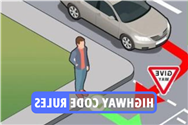
MAJOR Highway Code changes have came into force from today – with drivers, cyclists and pedestrians urged to brush up the new rules.
The new rules are essentially designed to improve safety for pedestrians, cyclists and horse riders, by targeting larger vehicles with a swathe of new rules.
The biggest Highway Code rule change is the new "hierarchy of vehicles", which means from midnight the more damage your vehicle can do, the more responsibility you have to ensure you don't put less-threatening road users at risk.
The hierarchy will be, in order of priority: pedestrians; cyclists; horse riders; motorcyclists; cars/taxis; vans/minibuses, with large passenger and heavy goods vehicles at the bottom.
What that means in reality is that you have ultimate responsibility to ensure you don't increase the risk for every vehicle above yours in the list.
Read our Highway Code live blog below for the latest updates…
- Milica Cosic
Drivers face £5,000 fine for flashing headlights wrong
DRIVERS need to beware of using their headlights wrong – or they could face large fines.
Motorists could end up paying £5,000 if they're sent to court for misusing their headlights.
Flashing a driver to intimidate them, to signal they can proceed at a roundabout or as a warning there are speed cameras up ahead are all strictly against road laws.
Rule 110 of the Highway Code states: "Only flash your headlights to let other road users know that you are there."
And 111 adds: "Never assume that flashing headlights is a signal inviting you to proceed.
"Use your own judgement and proceed carefully."
- Milica Cosic
Warning as drivers face £200 fine & 6 points for common habit
DRIVERS could now face a £200 fine and six points on their license for a common habit under a Highway Code change.
From today (January 29), motorists won't be able to take photos or videos, scroll through music playlists or play games while behind the wheel.
Drivers can still use a “hands-free” device when driving – such as a sat-nav.
- Milica Cosic
More driving rules you should know
- The new guidelines come at the same time as similar protections for pedestrians and cyclists.
- Other key changes to the Highway Code include stricter 20mph passing distances beside cyclists and rules on electric car cables.
- But there's good news for drivers, too: plans for new smart motorways have been scrapped by the Department for Transport.
- The controversial roads have been criticised for their changing speed limits, dodgy cameras and a spate of tragic fatalities.
- Milica Cosic
New Highway Code hierarchy puts HORSE RIDERS above cars
The new guidelines, which come into place today – January 29 – include a controversial new "road pyramid".
Drivers will be advised to pass equestrian road users at a speed of 10mph, down from the current 15mph.
And drivers must give priority to horse riders crossing the road at junctions – regardless who arrived first.
According to the British Horse Society (BHS), two horses are killed on UK roads each week.
A Department for Transport spokesperson told The Sun: "The proposed upcoming changes to The Highway Code will improve safety for cyclists, pedestrians and horse riders."
- Milica Cosic
Jeremy Clarkson blasts ‘mad’ change to driving rules
JEREMY Clarkson has blasted the "mad" driving rule change coming into force today.
The new rule is to stop drivers fiddling with their phones behind the wheel, meaning even tapping the pause button on your music app could land you with a £200 fine.
Writing in his Sun column in November, he said: "A new rule means you are not even allowed to touch your mobile telephone when you are behind the wheel. Even if you’re in a traffic jam.
"Seriously? If your random playlist decides to fill the car with Arctic Monkey noises and you really aren’t in the mood, you are no longer allowed to swipe the screen to make it stop.
"Are the people who write these laws mad? Because almost all human beings are capable of doing two things at the same time."
- Milica Cosic
All the fines of up to £2,500 drivers risk for breaking rules
THE HIGHWAY Code is having a revamp and new rules and clarifications will come into effect TODAY.
But what happens if you break the Highway Code? Drivers can face hefty penalties and even lose their licence.
- Driving without insurance – Every car on the UK's roads need to be insured. Not having it can see an unlimited fine and possibly banned from driving.
- Using a vehicle in a dangerous condition – Driving a car in a dangerous condition can be something as small as not having working wiper blades or a bald tyre. Drivers of cars can get a £2,500 fine but those who are driving LGVs or HGVs, the fine can be unlimited.
- Using a hand-held mobile phone when driving – Being caught with your phone at the wheel can will give you a £200 fine and six points on your licence. Your punishment may increase to a £1,000 fine, £2,500 for PCV or goods vehicle, and a ban if summoned to court.
- Dangerous cycling – Dangerous cycling comes with a £2,500 fine.
- Failing to identify driver of vehicle – Failing to provide details of a driver of a vehicle at anytime can see a £1,000 fine.
Read more here.
No using your phone at the wheel
Mobile phones are not allowed to be used at any point while at the wheel.
This includes when stuck in traffic and when stopping at red lights.
Taking photos and videos, scrolling through a playlist and playing games will also be prohibited.
The only exception to these changes is if you need to use your phone to pay for goods at a drive-through or paying for a toll, but only while the car is stationary.
Using your phone behind the wheel can get you a £200 fine and six penalty points on your licence.
If you've passed your test in the past two years to the offence, you will lose your licence.
There is a possibility that you could be summoned to court for using you phone while driving.
This could enforce a fine of up to £1,000, £2,500 if you were driving a bus or lorry, plus being banned from driving.
Rule change: Leaving your car and charging changes
The Dutch Reach is a safe way of opening your car door from the inside.
If you are the driver, you reach across your chest with your left arm to open the door rather than using the hand nearest the door.
It would be the same for the passengers sitting in the front but they would reach across with their right arm.
This is because the body will be forced to swivel around, helping you to see a cyclist, pedestrian or another vehicle coming from behind.
Doing this helps you scope out your surroundings before opening the door, meaning there is a lower risk of hitting anyone.
The Highway Code has revised a rule on owners of electric cars charging their car kerbside.
If EV charging points aren't used correctly, they can be hazardous.
Rule 239 will now say: "When using an electric vehicle charge point, you should park close to the charge point and avoid creating a trip hazard for pedestrians from trailing cables.
"Display a warning sign if you can. After using the charge point, you should return charging cables and connectors neatly to minimise the danger to pedestrians and avoid creating an obstacle for other road users."
New Highway Code change: Cyclists position on the roads
The cycling rules in The Highway Code have had a big revamp.
One of the major changes is all around the clarity of where cyclists should ride on the road.
Now, it is acceptable for cyclists to ride in the centre of the lane, in some situations.
Rule 72 in The Highway Code will say: "Ride in the centre of your lane, to make yourself as clearly visible as possible, in the following situations:
"On quiet roads or streets – if a faster vehicle comes up behind you, move to the left to enable them to overtake, if you can do so safely.
"In slower-moving traffic – when the traffic around you starts to flow more freely
move over to the left if you can do so safely so that faster vehicles behind you can
overtake."At the approach to junctions or road narrowings where it would be unsafe for
drivers to overtake you."- Milica Cosic
New rule: Cyclists and pedestrians in shared spaces
On shared-use cycle paths between pedestrians and cyclists, cyclists are the ones that must give way to pedestrians.
Pedestrians are also allowed to use cycle tracks unless there is a sign to say this is prohibited.
- Milica Cosic
How is the highway code enforced?
The highway code is being updated to improve road safety for vulnerable road users, but there will be no changes to the law. The rules of the highway code are advisory, meaning a person won’t be prosecuted for not complying with them.
However, the highway code can be used in court to establish liability in the event of an accident under the Road Traffic Act. This includes rules which say ‘should/should not or do/do not.’
If you are found to be at fault in an accident as a result of not complying with the Highway Code, you may face charges in court.
- Milica Cosic
Explained: The new Highway Code hierarchy
Drivers of any vehicles deemed to be more dangerous, such as buses and HGVs, must now be extra careful on the roads.
The new Highway Code hierarchy is as follows:
- Pedestrians
- Cyclists
- Horse Riders
- Motorcyclists
- Cars/taxis
- Vans/minibuses
- Large passenger vehicles or courier vehicles like buses and HGVs
According to the Highway Code hierarchy, those higher in the list must be vigilant of all those lower in the list.
- Milica Cosic
Other rules you need to know
- Here's all the rule changes to number plates happening that you need to know about.
- Another major shake-up to towing heavy loads is rolling out too.
- Here's three changes that could lead to a £1,000 fine
Change that gives cyclists priority
DRIVERS are set to play second fiddle to cyclists on UK roads under a controversial change to the new Highway Code.
Motorists will have to give way to cyclists and pedestrians at junctions.
Previously priority was only given to cyclists and pedestrians if they were already on the road.
Cyclists will also now be advised to stay in the middle of the road and even ride "two abreast" to be more visible in certain situations.
The 2022 Highway Code has a new "road user hierarchy" meaning drivers of more dangerous vehicles must be extra careful.
It dictates that cars must be more responsible around cyclists and pedestrians.
Cars indicating a left or right turn will have to give way to cyclists coming from behind or moving straight on.

Revised Rule 186
No longer will drivers be able to overtake cyclists as they are going around a roundabout.
They must also make sure they are giving cyclists plenty of room.
The revised Rule 186 says: "You [driver] should give priority to cyclists on the roundabout. They will be travelling more slowly than motorised traffic.
"Give them plenty of room and do not attempt to overtake them within their lane. Allow them to move across your path as they travel around the roundabout.
"Cyclists, horse riders and horse drawn vehicles may stay in the left-hand lane when they intend to continue across or around the roundabout and should signal right to show you they are not leaving the roundabout.
"Drivers should take extra care when entering a roundabout to ensure that they do not cut across cyclists, horse riders or horse drawn vehicles in the left-hand lane, who are continuing around the roundabout."
- Milica Cosic
New Highway Code rule change for roundabouts
DRIVERS are being urged to check out The Highway Code's rule changes for using a roundabout.
Motorists will need to be extra vigilant of those around them on the road, and especially cyclists.
A "hierarchy of road users" will be brought into place, ranking road users depending on who would be most at risk in terms of an accident.
Larger vehicles, such as HGVs, are the least at risk but cyclists are the second highest, only after pedestrians who are deemed the most vulnerable.
Three extra "H" rules have been brought in to clarify the hierarchy.
Rule H3, aimed at drivers and motorcyclists, says: "You should stop and wait for a safe gap in the flow of cyclists if necessary. This includes when cyclists are:
- approaching, passing or moving off from a junction
- moving past or waiting alongside stationary or slow-moving traffic
- travelling around a roundabout
Extra clarity has been set out in rule 186 of The Highway Code to reflect any changes.
Updated highway code in force TODAY
The new refreshed Highway Code comes into effect from today.
Under new Highway Code rules, drivers will be looking out for pedestrians and cyclists a whole lot more, with many of the changes coming in impacting them.
Among the new rules being introduced is a "hierarchy of road users", extra clarity on where cyclists can ride on the road and where pedestrians will now have the right of way over motorists.
Another rule change is aimed at horse riders and cyclists too. If a pedestrian is waiting to cross at a junction and a driver is turning, they must give way to the pedestrian.
And a major change is around the clarity of where cyclists are able to ride on the road. Now, it is acceptable for cyclists to ride in the centre of the road, in some situations.
Brits face new parking fines after new rules come into force
BRITS are set to face an avalanche of parking fines later this year – with an expert warning motorists about "unfair" rule changes.
The complex new parking rules coming into force for 2022 will see a raft of new situations arise where drivers might get stung.
On May 31, councils in England and Wales will be given new powers to fine motorists up to £70 for minor traffic offences such as stopping in yellow box junctions, illegal turns and driving in cycle lanes.
Currently, only the police can enforce this – but new CCTV cameras will inform council officers of any offenders.
The Department of Transport has said this increased supervision will allow buses to be more punctual as well as to protect cyclists.
For London, councils are already able to issue parking fines for stopping in yellow boxes using cameras.
When do the new Highway Code rules take place?
It's important to know that the new Highway Code comes into effect this weekend.
Today – that is Saturday (January 29) – the new Highway Code comes into effect.
Waze creating push notifications on highway code changes
To help in addressing this problem, community-based traffic and navigation app Waze will be sending out push notifications to help drivers stay informed of these latest rule changes and be aware of cyclists on the road.
The UK Country manager for Waze, Ru Roberts, has said: “The overhaul of the Highway Code may come as a surprise to some road users this week, requiring motorists to refresh their road safety knowledge.
"The revamped code introduces a hierarchy on the roads which means those who pose the greatest risk to others have a higher level of responsibility.
"While it applies to all road users, those in the driving seat will more often than not be left with the greatest responsibility.
"Through in-app alerts and notifications, Waze helps our users stay informed about what's happening on the roads around them. With the latest updates to the Highway Code coming into effect on Saturday, we're reminding drivers to be particularly aware of cyclists on the road.”
Explained: The new Highway Code changes (Continued…)
Pedestrians will have priority on pavements and at zebra crossings.
A new rule makes clear that at a junction, drivers should give way to pedestrians crossing or waiting to cross a road into which, or out of which, they are turning.
Cyclists will have priority at junctions when travelling straight ahead.
And there is also guidance on safe passing distances and speeds.
The new Code makes it clear that 20mph speed limits must not be exceeded by drivers.
Also:
- Electric vehicle drivers are advised to park close to charge points and avoid cables creating trip hazards.
- Cyclists should give room when passing pedestrians on shared cycle paths.
For motorists who get annoyed with middle lane hogging on motorways, a tweak to the rules in 2021 says "you should return to the middle lanes and then the left-hand lane when it is safe to do so".
The Code already runs to more than 150 pages with over 300 rules.
The aim of the changes is also to improve guidance for drivers using motorways, including what to do during a breakdown or incident.
This follows concern over dozens of fatalities on so-called smart motorways, where there is no hard shoulder or the hard shoulder can be converted to live traffic.
- Milica Cosic
What are the new Highway Code rules 2021?
The new version of the Highway Code includes a "hierarchy of road users".
This will ensure that people who can cause the most harm in a collision, such as those in vehicles, bear the "greatest responsibility to reduce the danger they may pose to others".
So, a lorry driver will have a greater responsibility to those driving a car or motorcycle, and likewise people cycling would have a greater responsibility than pedestrians.
The hierarchy will be, in order of priority: pedestrians; cyclists; horse riders; motorcyclists; cars/taxis; vans/minibuses, with large passenger and heavy goods vehicles at the bottom.
- Milica Cosic
What is the Highway Code hierarchy?
The "Hierarchy of Road Users" is a concept that ranks road users in order of those who are most at risk in the event of an accident.
It is no surprise that pedestrians top the group, as they can cause the least harm on the road but are highly vulnerable in an accident.
According to the Highway Code hierarchy, those higher in the list must be vigilant of all those lower in the list.
Drivers of any vehicles deemed to be more dangerous, such as buses and HGVs, must now be extra careful on the roads.
The new Highway Code hierarchy is as follows:
- Pedestrians
- Cyclists
- Horse Riders
- Motorcyclists
- Cars/taxis
- Vans/minibuses
- Large passenger vehicles or courier vehicles like buses and HGVs
- Milica Cosic
AA accuses Gov. of not telling people about new rules
The AA accused the Government of being "far too silent" on the changes, but the Department for Transport (DfT) insisted it will ensure "all road users are aware".
AA head of roads policy Jack Cousens said: "With a week to go, too many drivers are unaware of the new rules of the road.
"While the Government formally announced these changes last summer, they have been far too silent in promoting them.
"Shockingly, one in 25 drivers say they have no intention of looking at the new rules.
"These changes affect everyone, so we encourage people to read the updated code now so we can make our roads safer."
- Milica Cosic
Pavement parking in England could be BANNED
DRIVERS could be banned from parking on the pavement this year as part of a huge update to road rules.
The government is considering making it illegal for motorists to block pedestrian routes with their cars.
The proposal is designed to make it easier for disabled people to get around.
One of the options on the table is a legislative change that would introduce a "London-style" pavement parking ban across England. Pavement parking is banned on almost all of the capital's streets, and drivers face fines of up to £70 for breaking the rules.
The move would place a blanket ban on parking on the pavement across the country – but there would be exemptions set out with road signs.
It would be the "most significant change to English parking law in several decades", the government consultation document said.
Source: Read Full Article