Australian petrol prices could reach $2.50 a litre at the bowser in coming weeks as the price of crude oil soars because of escalating international sanctions against Russia for invading Ukraine.
The price of crude oil, the natural resource which is processed and refined into transport fuels including petrol, has smashed the $US100-a-barrel mark to peak at $US139 earlier this week, the highest level since 2008.

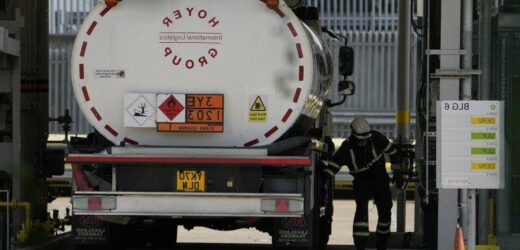
Petrol prices are set to rise again as Russia faces increased oil sanctions. Credit:AP Photo/Alastair Grant
Petrol now costs as much as $2.20 at some locations in Sydney on Wednesday, and reached $2 at Melbourne service stations. The price of petrol is adding to cost of living pressures on Australians just weeks out from the federal election, with inflation rising at the fastest rate in years.
Graeme Bethune, chief executive of Adelaide-based consultancy EnergyQuest, said the expectation of increased oil demand as international air travel ramps up after the pandemic-driven downturn was contributing to Australia’s prices. “I wouldn’t be surprised if they got to $2.50,” Dr Bethune said.
Oil prices are being driven up by global uncertainty over the rolling sanctions being placed on Russia, which accounts for about 11 per cent of the world’s supply of crude oil. In the latest developments, the United States and United Kingdom on Wednesday said they would ban the importation of all Russian oil.
Fuel suppliers and oil refiners around the world, including Australia’s Ampol and Viva Energy are also shunning Russian oil.
Curtin University energy economist Roberto Aguilera said $2.50 petrol was “not out of the question”, but he expected pain at the bowser to start easing by the middle of the year as oil-producing nations worldwide increased production in response to high prices.
“That will mostly come from the US, but also most of the important oil-producing regions of the world, including the Organisation of Petroleum Exporting Countries (OPEC), have an agreement in place to steadily raise the monthly production through 2022,” Dr Aguilera said.
“The result of all this should be some downward pressure on oil prices and consequently on petrol, which should eventually help bring relief to drivers.”
High petrol prices don’t drive many people to give up their cars, experts said, but if they remain elevated for many months enough motorists may switch to other forms of transport to ease traffic congestions.
Grattan Institute transport and cities director Marion Terrill said persistently high petrol prices could reduce the number of motorists on the road by around 2 per cent.
“Once the road system gets congested even just one more car makes a big difference,” Ms Terrill said. “You notice it in school holidays – the reduction in traffic is not that big, but it’s a lot quieter on the road.”
AMP chief economist Shane Oliver said on Wednesday the high petrol prices would add about $15 a week to the average Australian household’s petrol bill since December.
“If sustained, that’s a big $750-a-year hit to real household spending power, to which must also be added all the indirect ways higher oil prices boost prices,” Dr Oliver said.
Petrol prices in America hit a record high on Wednesday, reaching an average price equivalent to $1.52 per litre in Australia.
President Joe Biden said the US would also boycott Russia’s liquefied natural gas (LNG) and coal in a bid to thwart Putin’s “war machine” and further punish him for his unprovoked attack.
Most Viewed in Politics
From our partners
Source: Read Full Article

